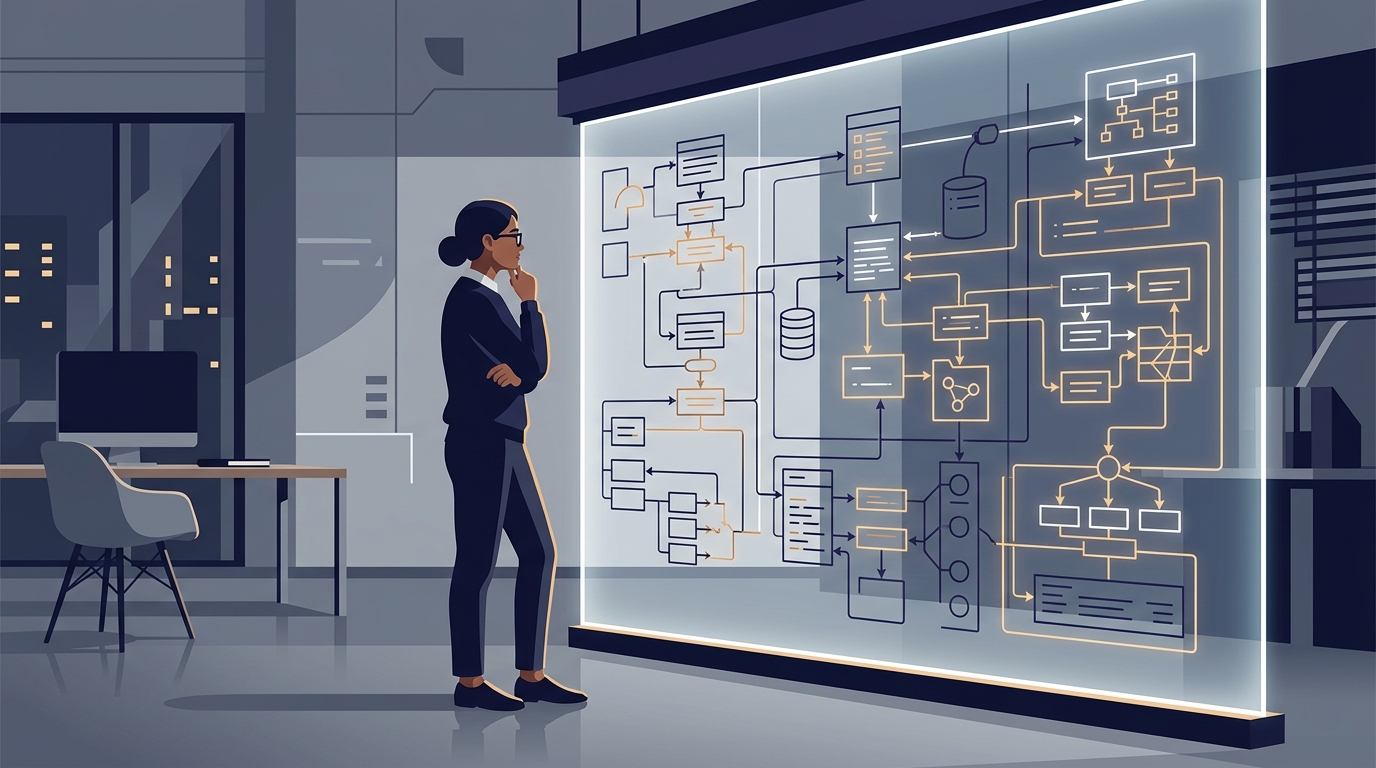
Reflexively opening your IDE, creating a new git branch, and immediately writing code the moment a task lands in your queue is a habit many engineers fall into early in their career. In an era where generative AI can produce boilerplate, components, and unit tests in seconds, measuring engineering value by lines of code or pull request volume is a dangerous trap. The engineers who drive true impact—and save their teams months of wasted effort—are the ones who step back to ask hard questions, challenge requirements, and map out the problem space before touching a single key.
Every line of code you commit is a future liability, not an asset. It demands ongoing maintenance, testing, security audits, and mental overhead for every developer who touches the codebase after you. Senior engineering judgment isn't about how fast you can implement a feature; it's about evaluating architectural trade-offs, understanding domain boundaries, and finding the simplest solution to the underlying business problem. Quite often, the most elegant and valuable outcome is discovering that a problem can be solved with a configuration tweak, an existing component, or by reframing the requirement so no new code needs to be written at all.
For developers navigating today's tech landscape, your real leverage isn't syntax speed—it's your ability to think, communicate, and exercise strategic discernment. Spend more time before you code: outline architectural trade-offs, clarify user intent, validate assumptions, and leverage AI tools to accelerate execution rather than outsource your critical thinking. Learning when not to write code is what transforms a software developer from a passive task executor into a trusted technical leader.
Original Article: You're Not Paid to Write Code by Dr Milan Milanović